State of Change
An ice structure that melts into sound (TU/e InnoSpace, Art & Tech, Q1 2025/2026)
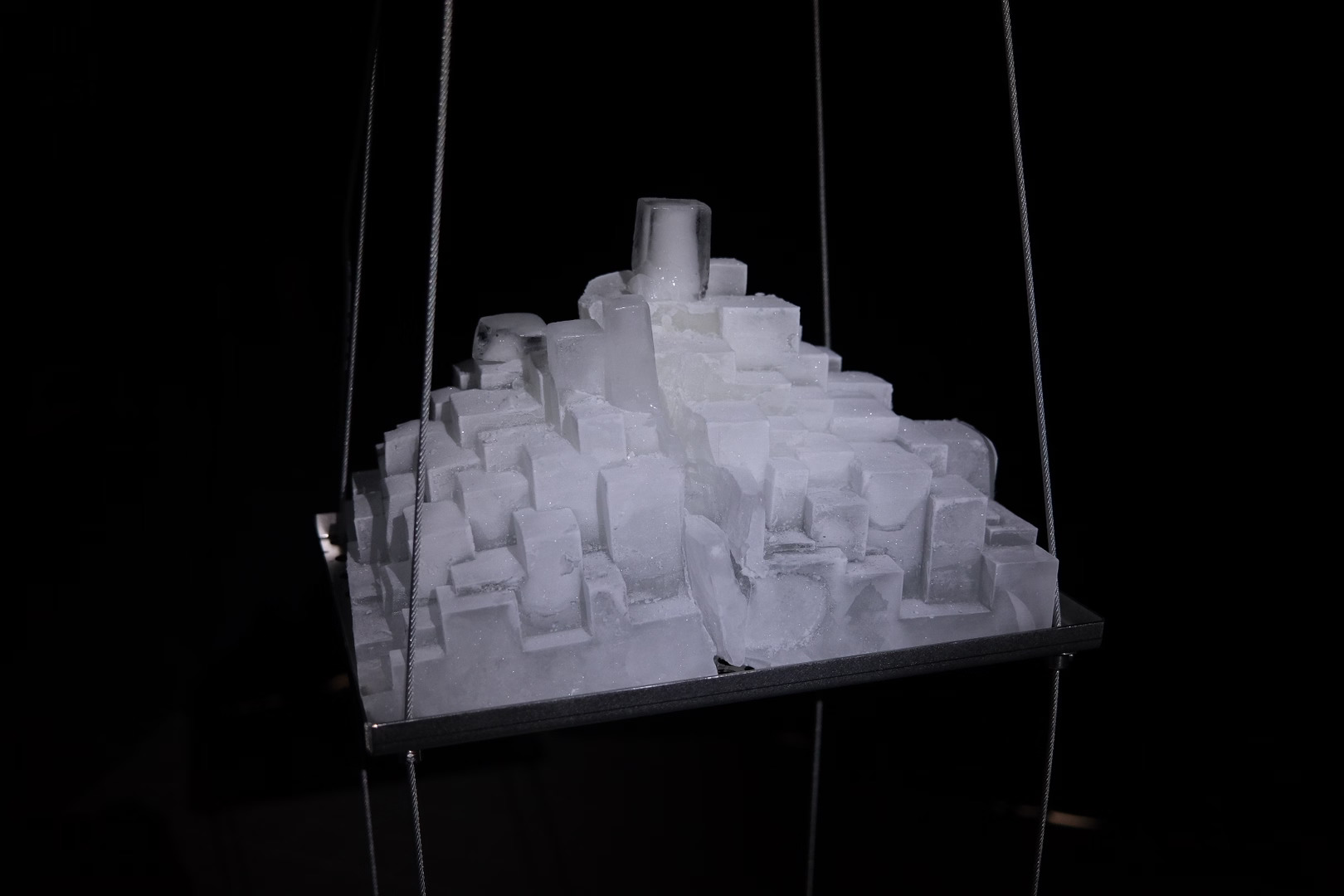
I built this with a team of four for TU/e InnoSpace’s Art & Tech course. The brief was a single prompt: water, and its never-still nature. We spent a quarter turning that into an installation that melts in front of you and lets you listen to it happen.
The concept
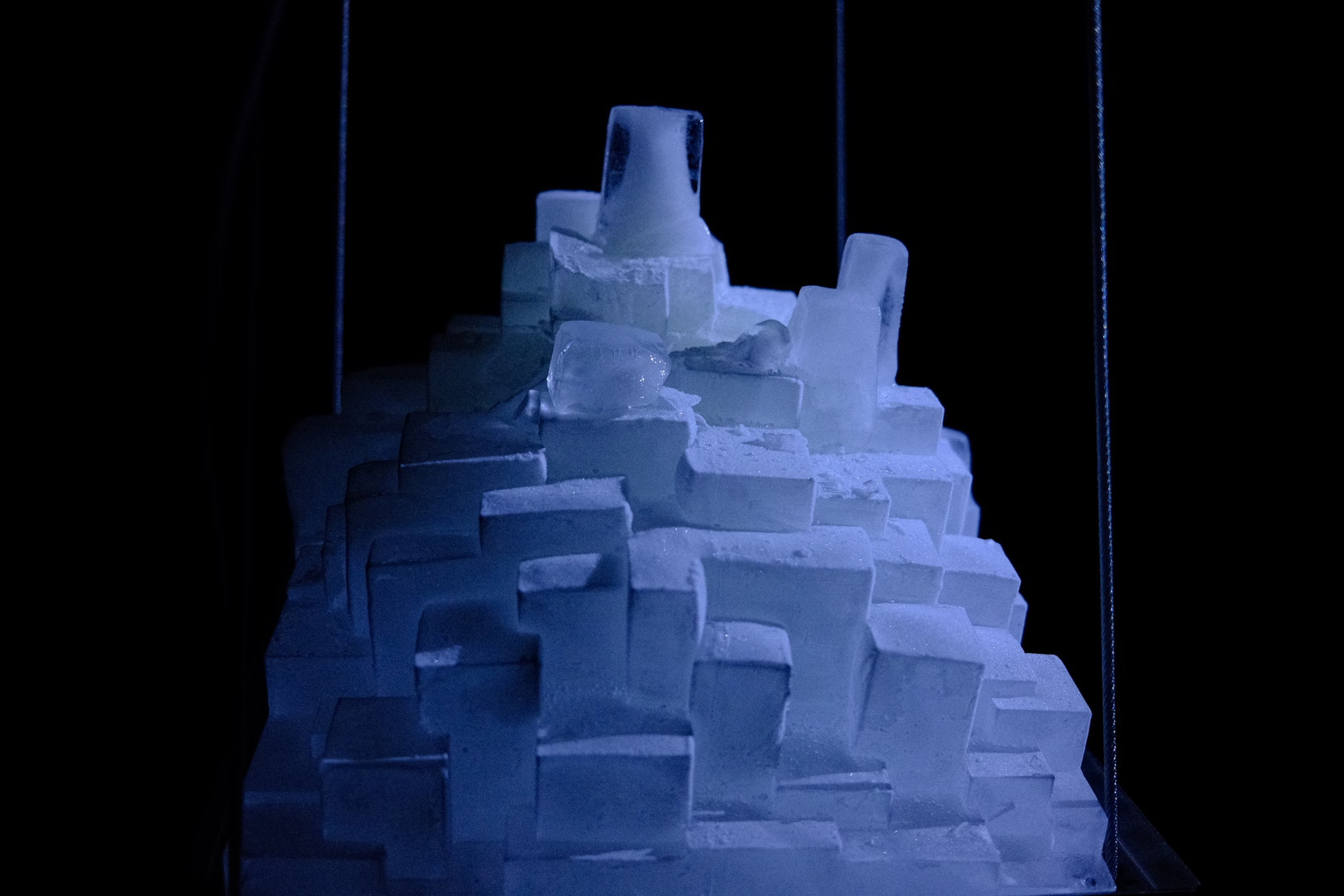
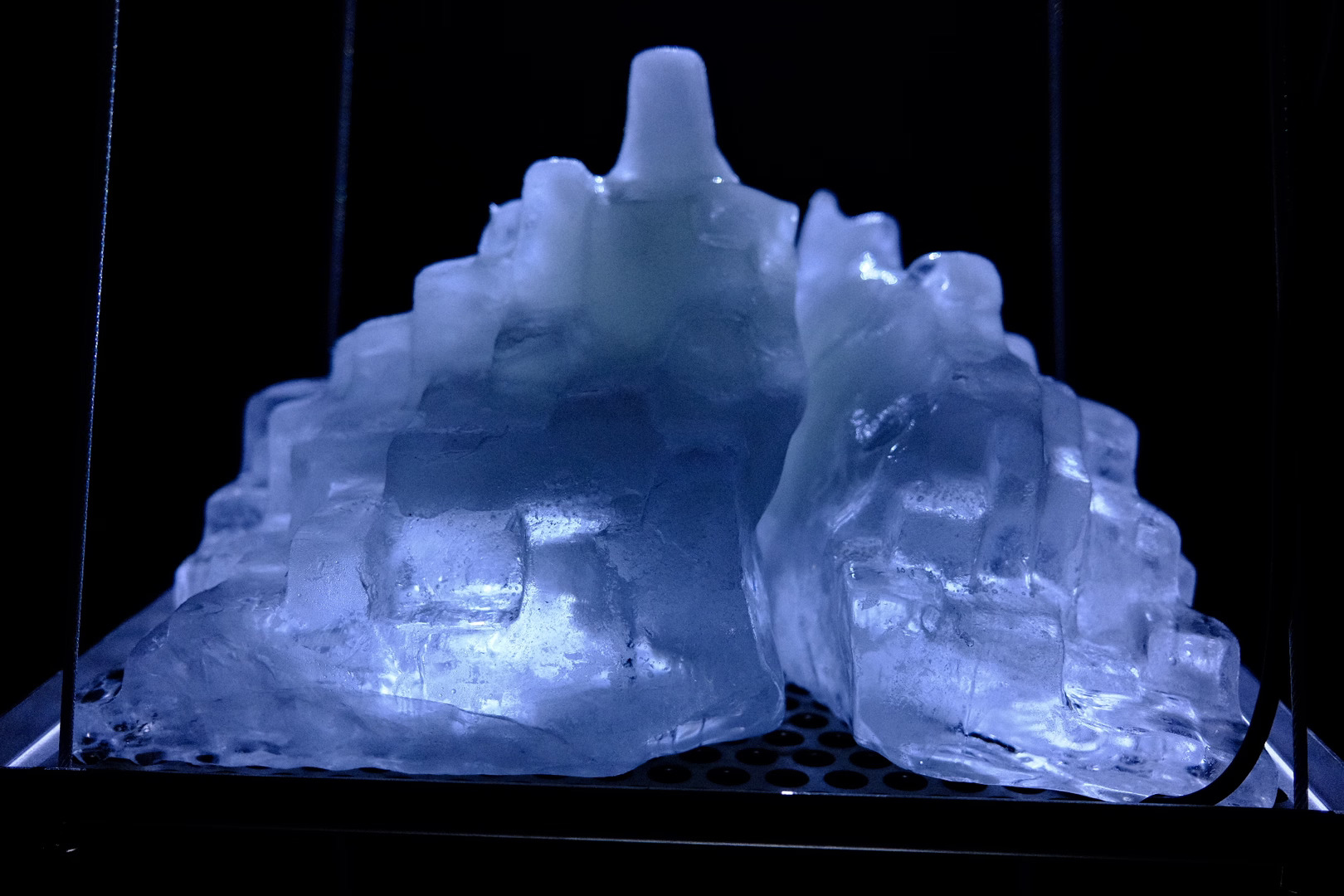
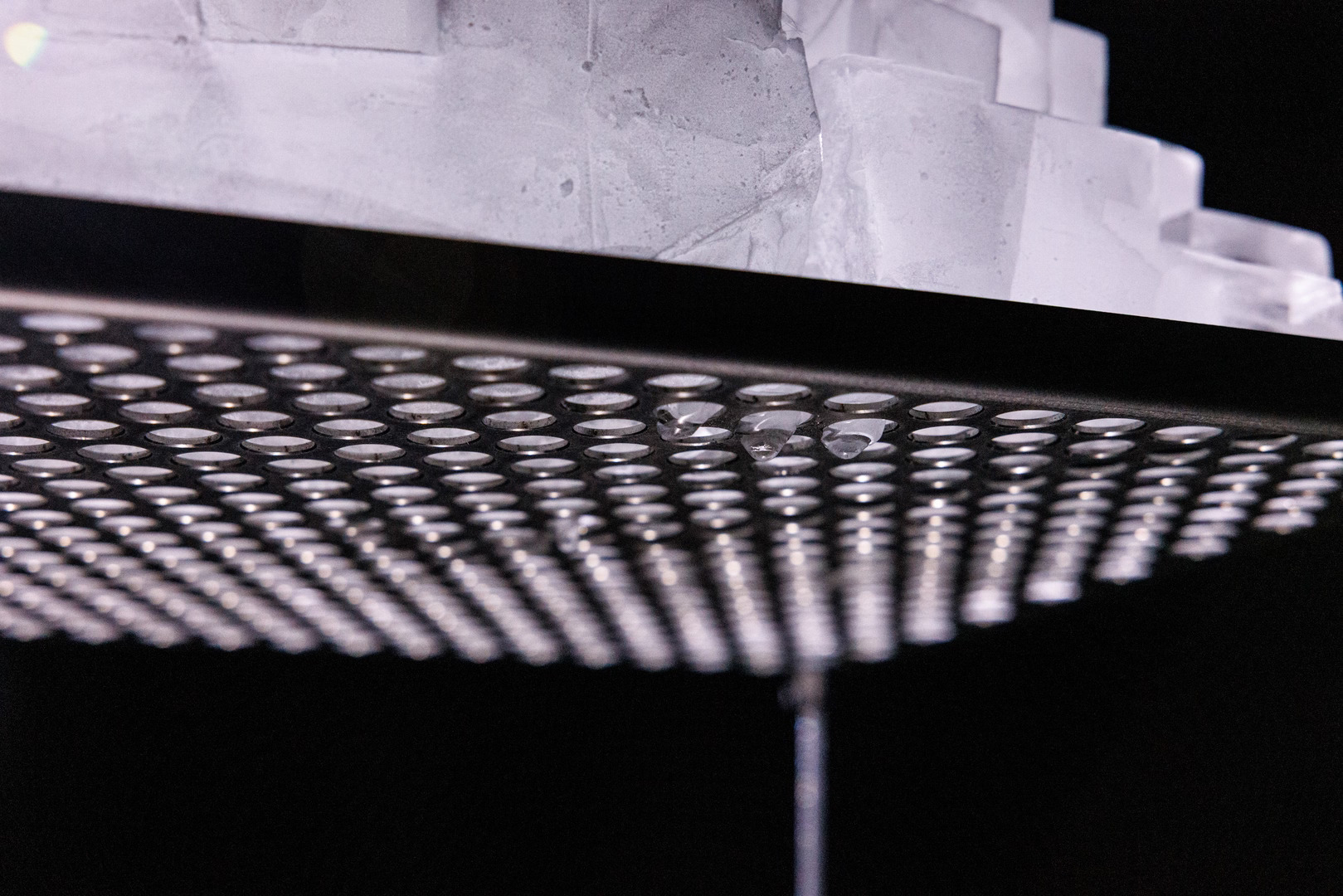
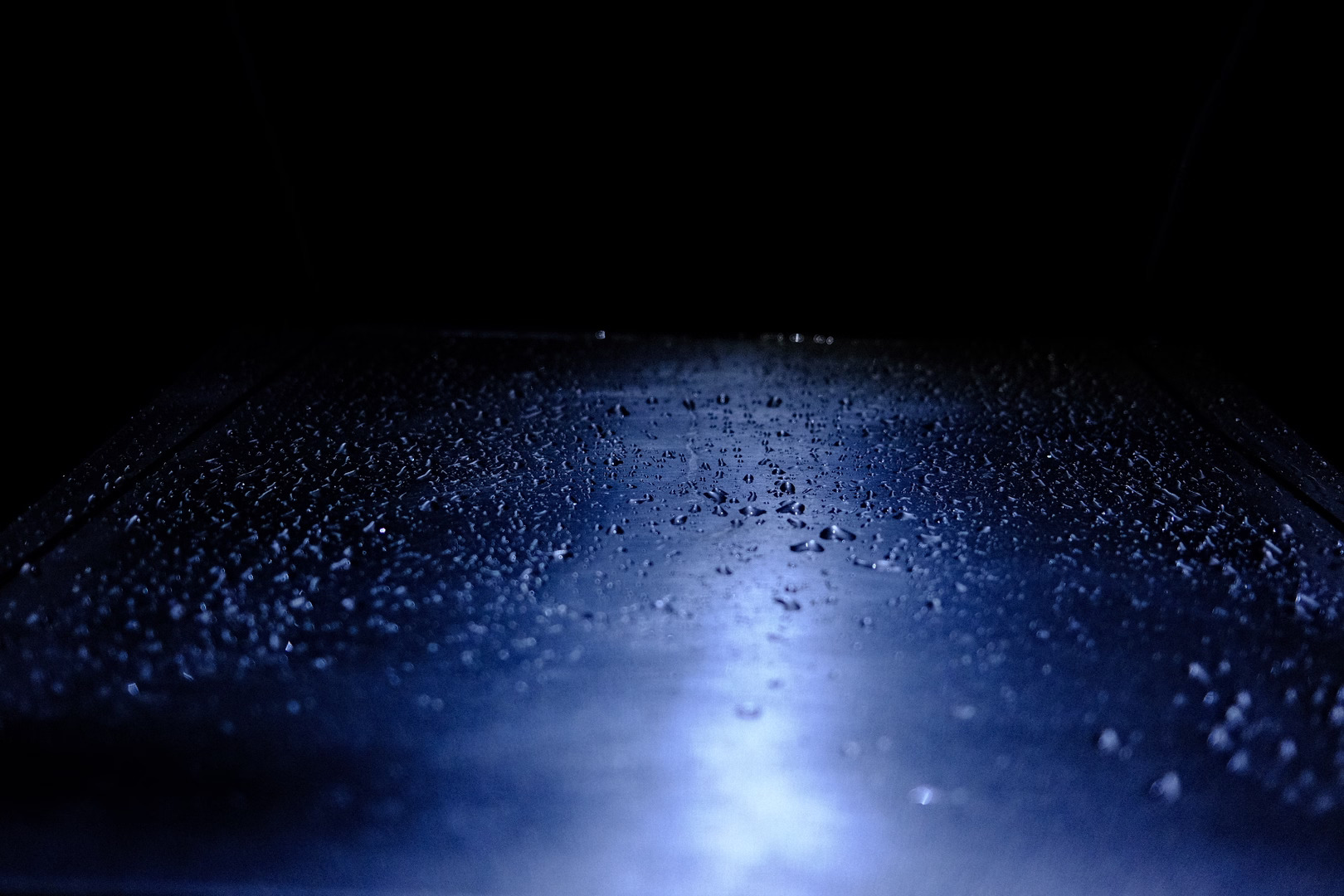
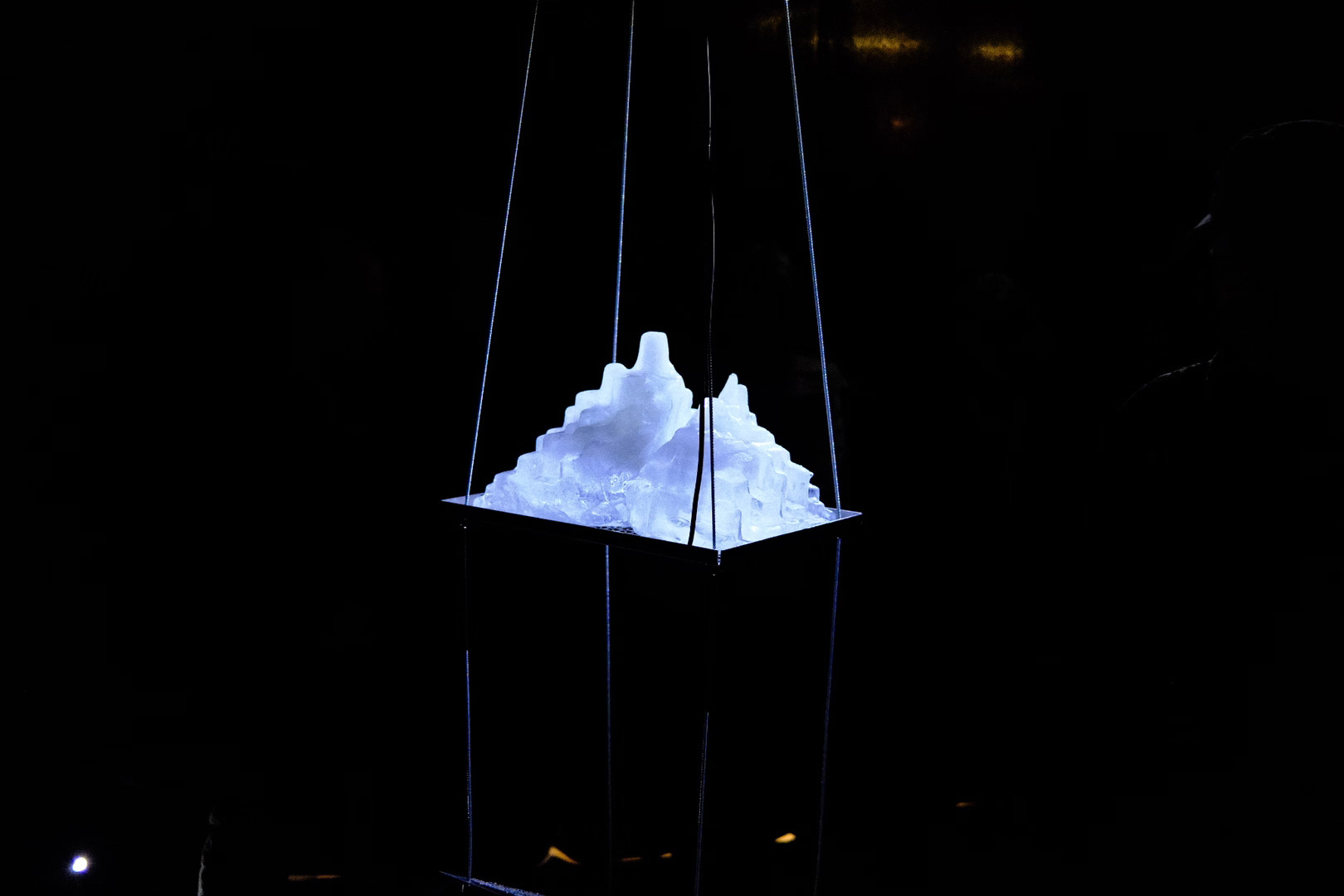
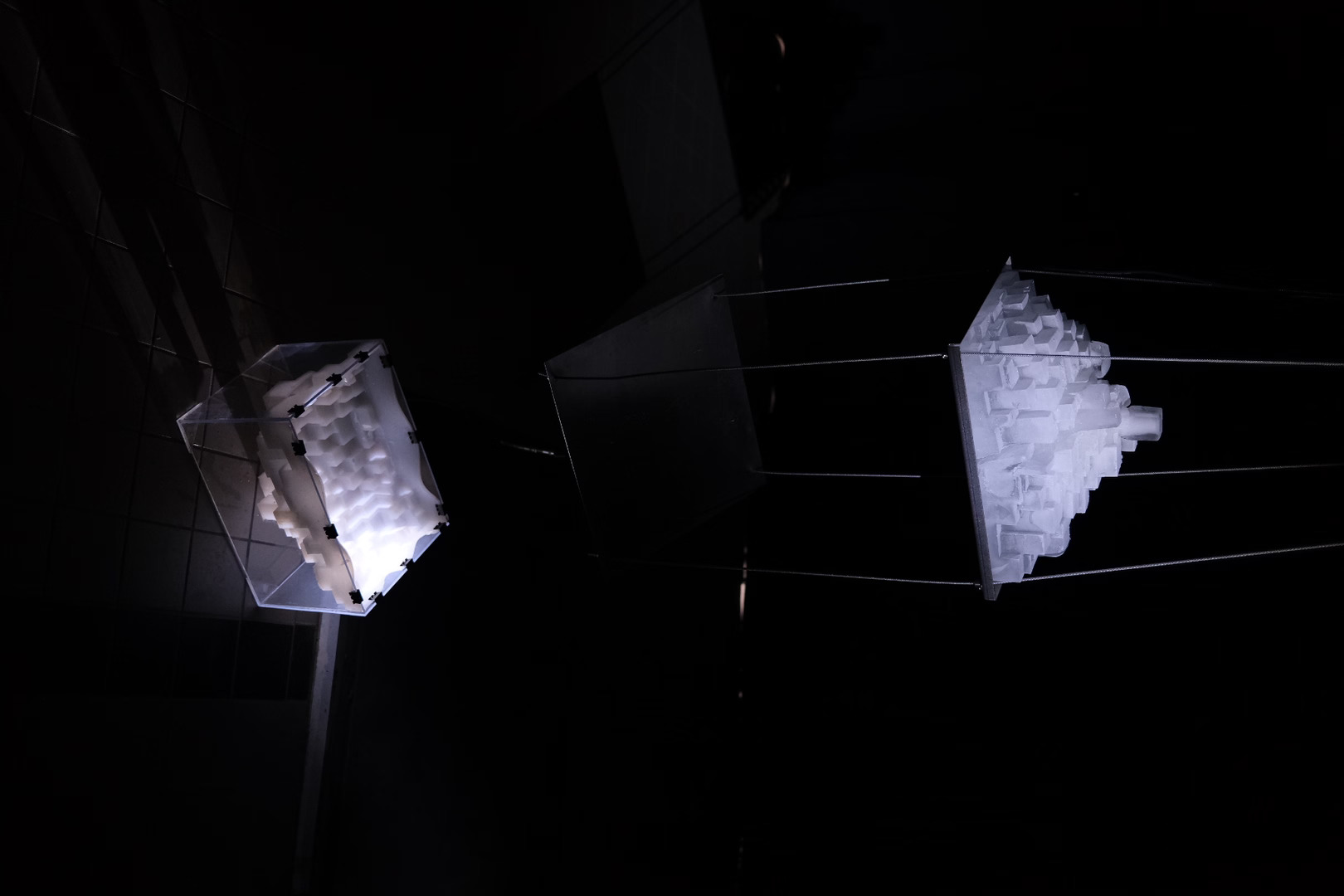
Ice never stops moving, even when it looks solid. We cast a miniature “city,” a block of ice shaped like a skyline, and let it melt over a steel grid. Contact microphones under the grid pick up and amplify every drop, and a pair of headphones lets visitors listen to the quieter sound of the ice cracking from the inside. The melted water collects in a mirror-image mold underneath, so the negative space slowly fills with everything the original has lost.
The physical process, a rigid structure breaking down into something soft and formless, was meant as a stand-in for how cities and systems change under pressures they don’t control: rising seas, decay, slow erosion. Nothing in the piece explains that directly. It’s meant to be felt through sound and structure, not read off a wall label.
Building it
My part of the build was the mold and the sound rig. Getting a castable, freezable, city-shaped structure took a few failed approaches first.
Vacuum forming was the first attempt, since it’s fast for complex convex shapes. It fell apart on release. The mold size was capped at 23×43×14 cm in the prototyping studio, too short for the skyline silhouette we wanted, and clear plexiglass turns brittle and cloudy when frozen.
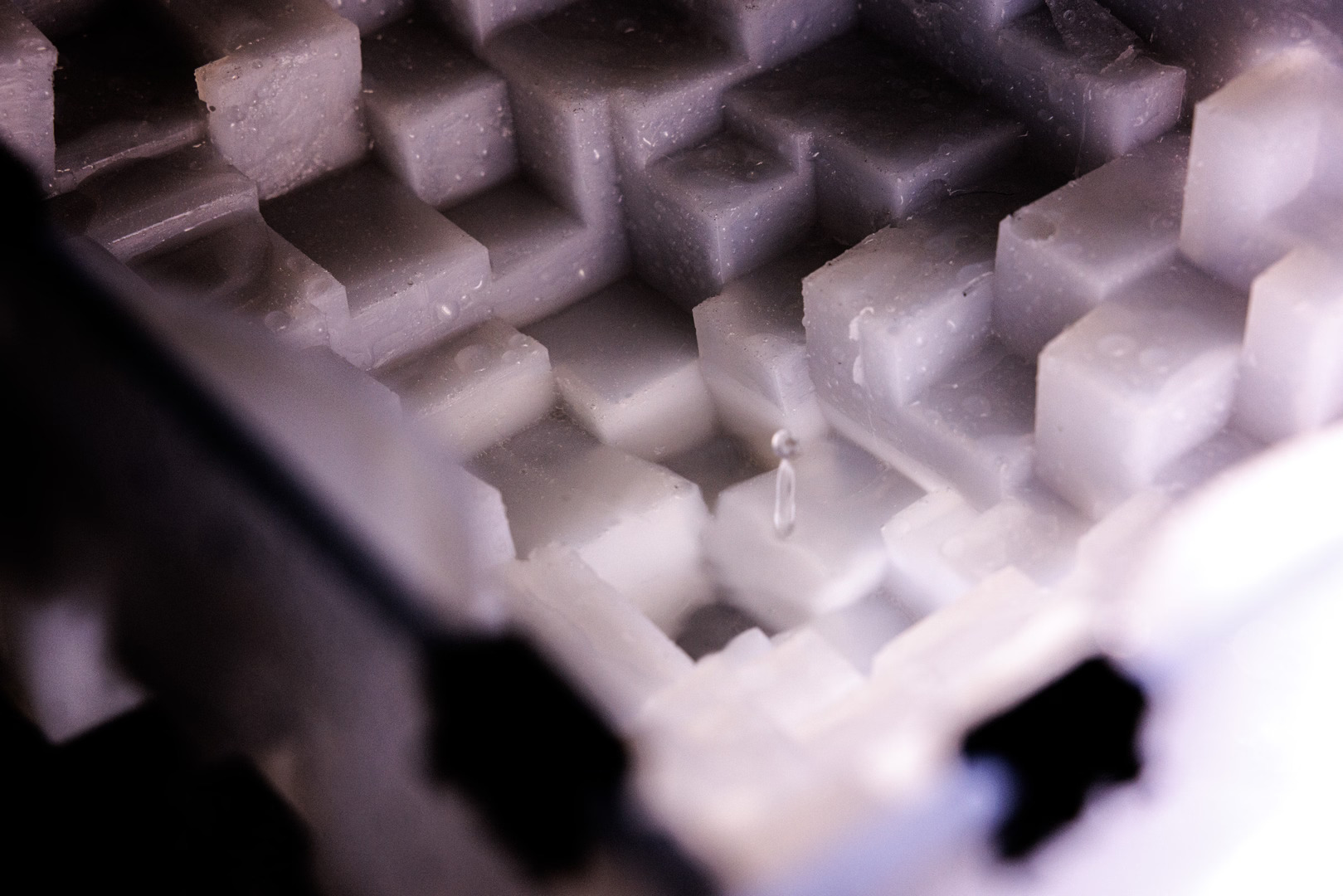
What ended up working was a 3D-printed positive with a silicone-cast negative. I printed the structure in two halves with a 5 mm gap, aligned with printed registration features, then cast silicone around it. The first pour leaked from nearly every seam we’d sealed with gaffer tape and superglue. We lost most of a liter of silicone before deciding to just keep pouring and patch the gaps in a second pour once the first had cured. The patched mold held.
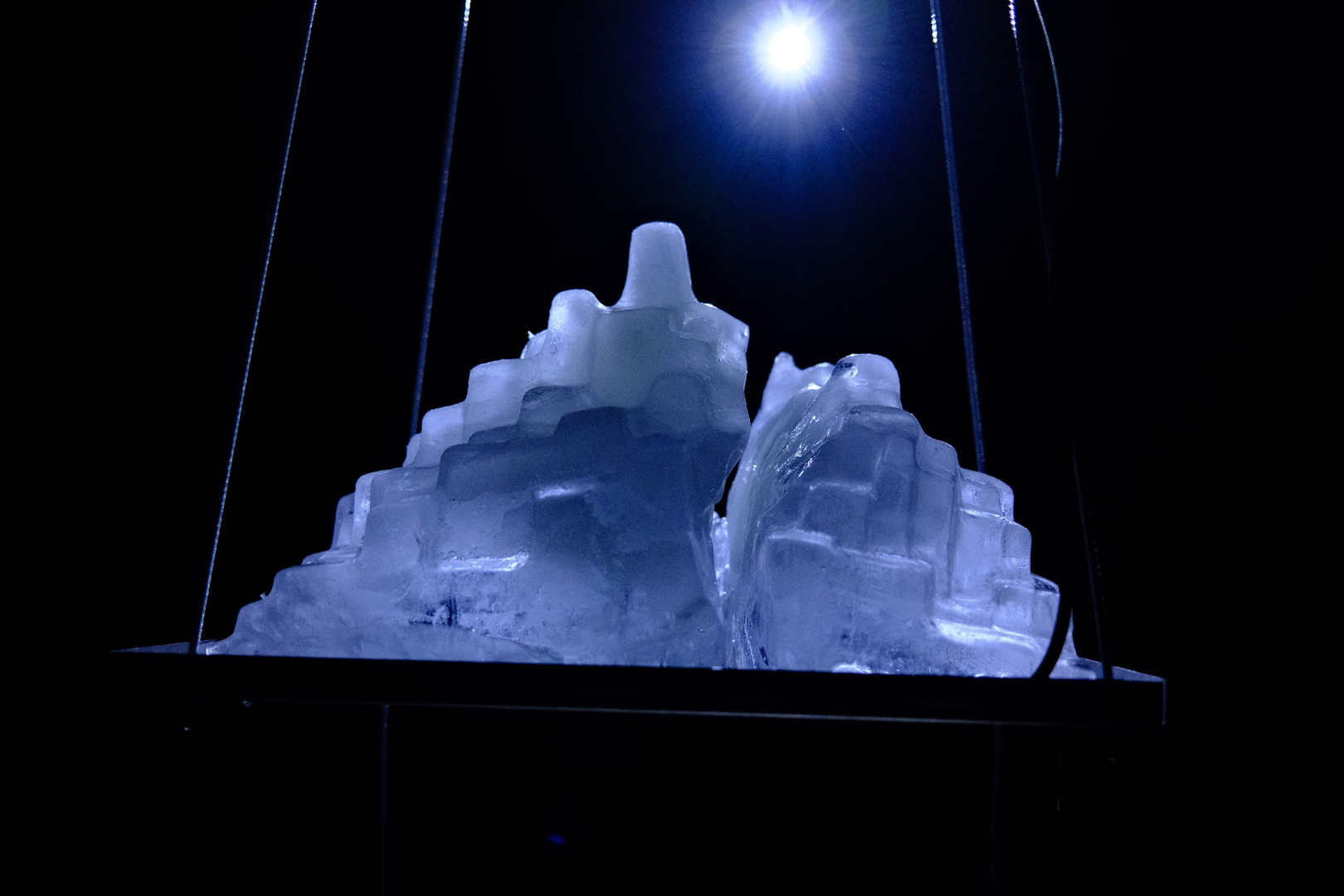
The final ice pour only had one shot: one freezer, one mold, no do-overs before the exhibition. It came out of the freezer with a crack through the center where the mold had spread under the ice’s expansion. We left it as is, and the crack kept widening as the exhibition went on.
For the support structure, I ran FEA on a few plate thicknesses to size a steel frame that could hold roughly 20 kg of ice without sagging, and had the final plates laser-cut in 2 mm steel rather than waterjet, which came out faster and cleaner. The whole thing hangs from steel cable rather than threaded rod. That was a late change; rigid rod made the installation look and sound like hardware, not like it was floating.
For sound, we skipped digitizing anything. A piezo element sits directly under the drip plate and drives a speaker, and a DIY hydrophone frozen into the ice feeds a pair of headphones. Both are fully analog signal paths, so what you hear is the literal mechanical impact of the water, not a recording or a synthesized stand-in for it.
Final demonstration
We set the installation up inside a dark curtained room lit by two spotlights, one on the ice and one on the collection box. Visitors reacted more strongly than we expected. Several asked to touch the structure, and more than one person stood at the headphones station for several minutes just listening. The room ran warmer than the rest of the exhibition space, which sped up the melt rate past what we’d planned for, and a few drops missed the collection box onto the floor. Both were things we only learned by running the piece live in front of people.
Reflection
We had exactly one freeze-and-melt cycle to get right, with no dry run of the full assembly at scale, so more of the build than usual had to be worked out on paper and in FEA instead of by trial and error. The crack that formed in the final ice block wasn’t something we planned for, but it fit: we’d built a piece about lack of control, and the material found its own way to make that point on the way out of the mold.
The full write-up, team bios, sound-design experiments, mold iterations, and exhibition feedback included, is in the report linked in the sidebar.