Furniture Design - Ultimate Bar
A compact home bar, designed and built start to finish in one quarter
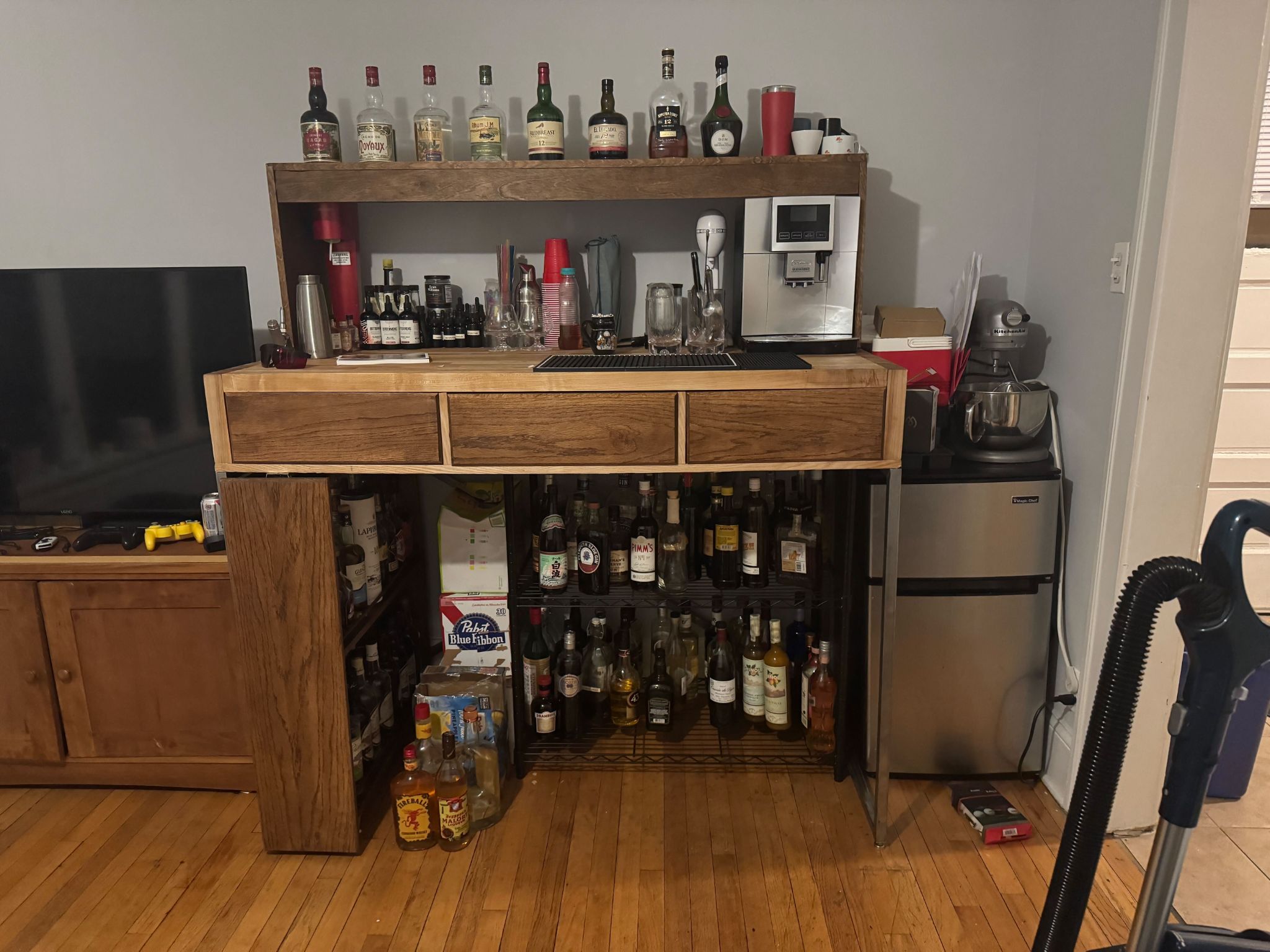
This was my class showcase piece for Furniture Design, and my first time both woodworking and welding. It started from a real problem: my apartment’s existing shelving barely held my bottle collection and was one wrong pull away from a domino effect.
Design
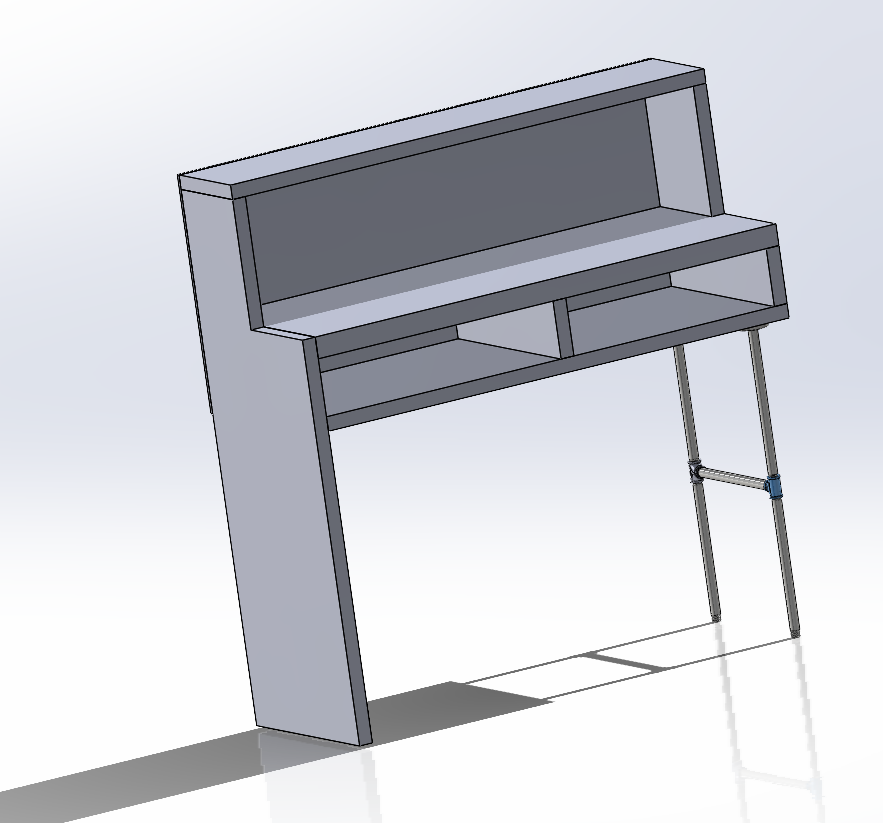
I measured everything the bar needed to hold before sketching anything: bottle heights (up to 14”), glassware (up to 8.5” for stemware), a Sodastream, and an espresso machine that needs 3.5” of clearance above it to fill the hopper. Those numbers, plus a hard 29” depth limit before the unit would block a doorway, set the working envelope for the whole design before a single board was cut.
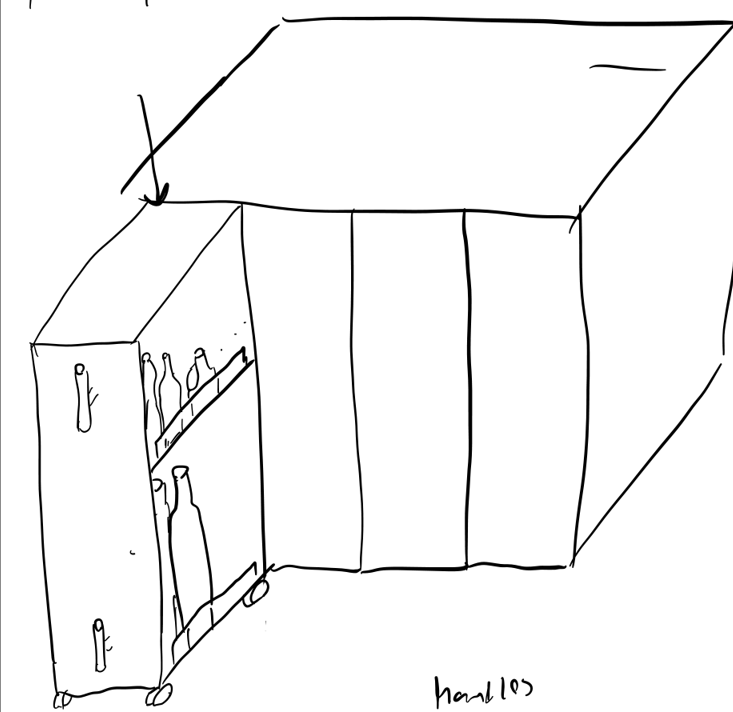
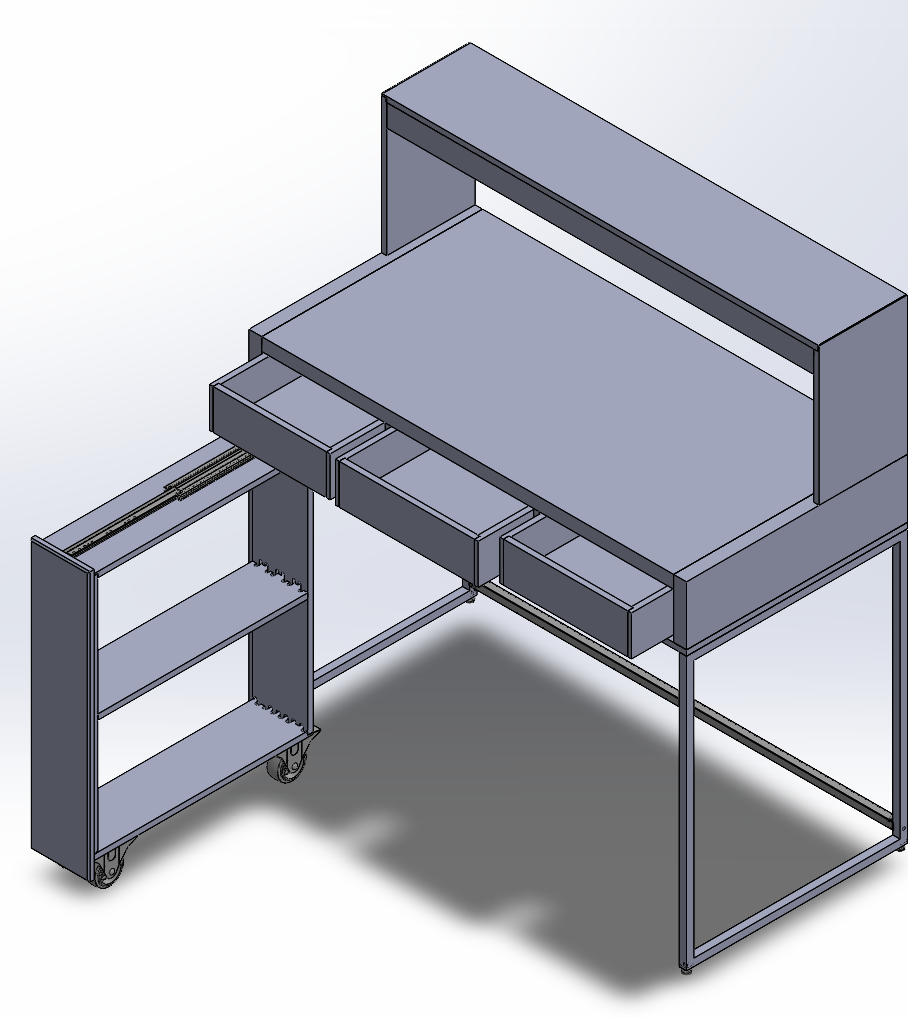
Early sketches went through a few rounds of feedback: whether the bottles should be hidden or displayed, whether a tiered drawer system made more sense than open shelving, and whether the whole thing should be able to roll. That last idea became the rolling cart on one side, which pulls out from under the bar to reach a 36-bottle rack that would otherwise be inaccessible.
Building it
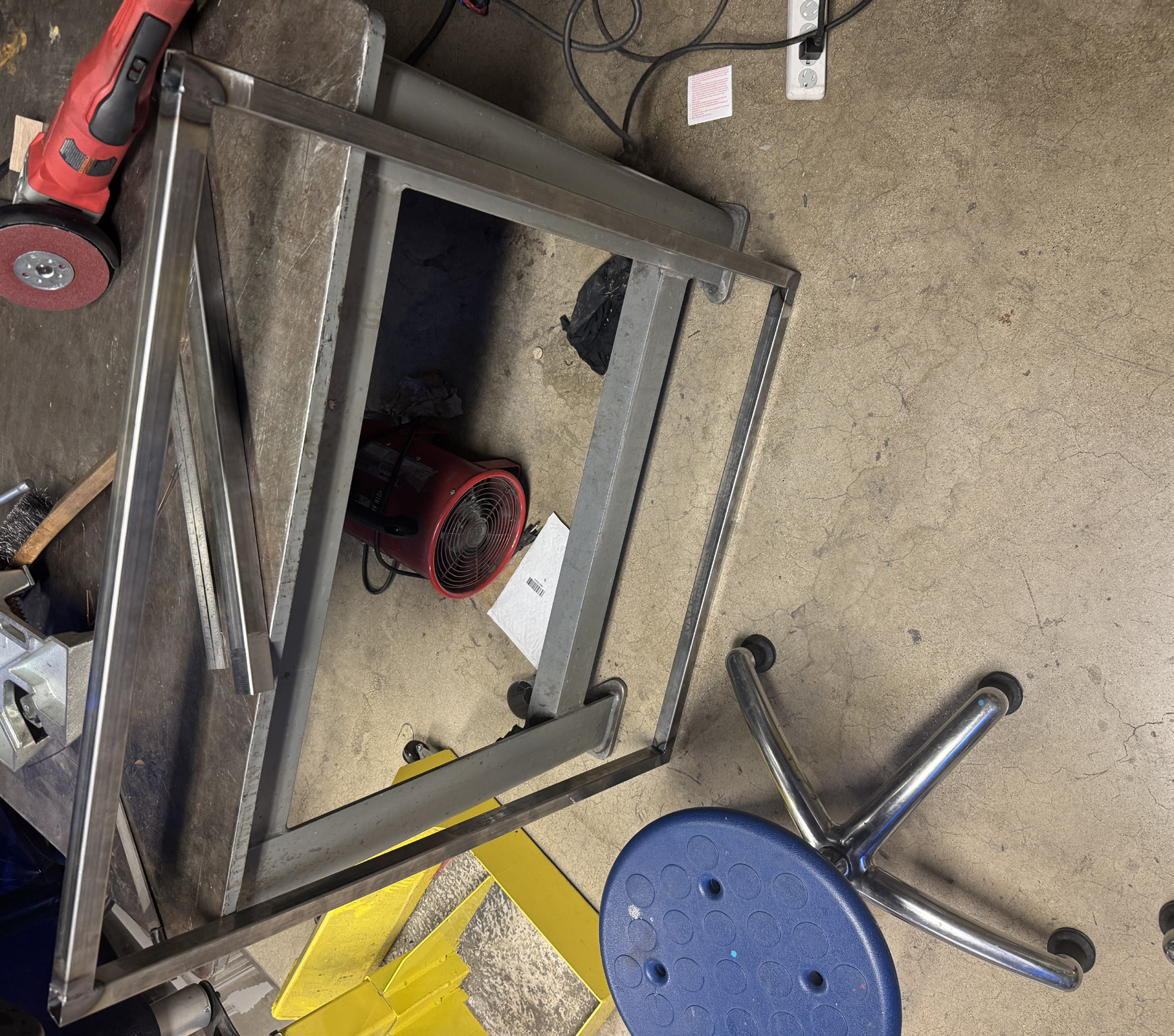
The frame is welded steel tube, finished with mineral oil, with a McMaster workbench top standing in for an actual hardwood slab once I priced those out. I practiced welds before cutting the good tube, then cleaned up the finished frame with an angle grinder and orbital sander to get a smooth, consistent surface before finishing it.
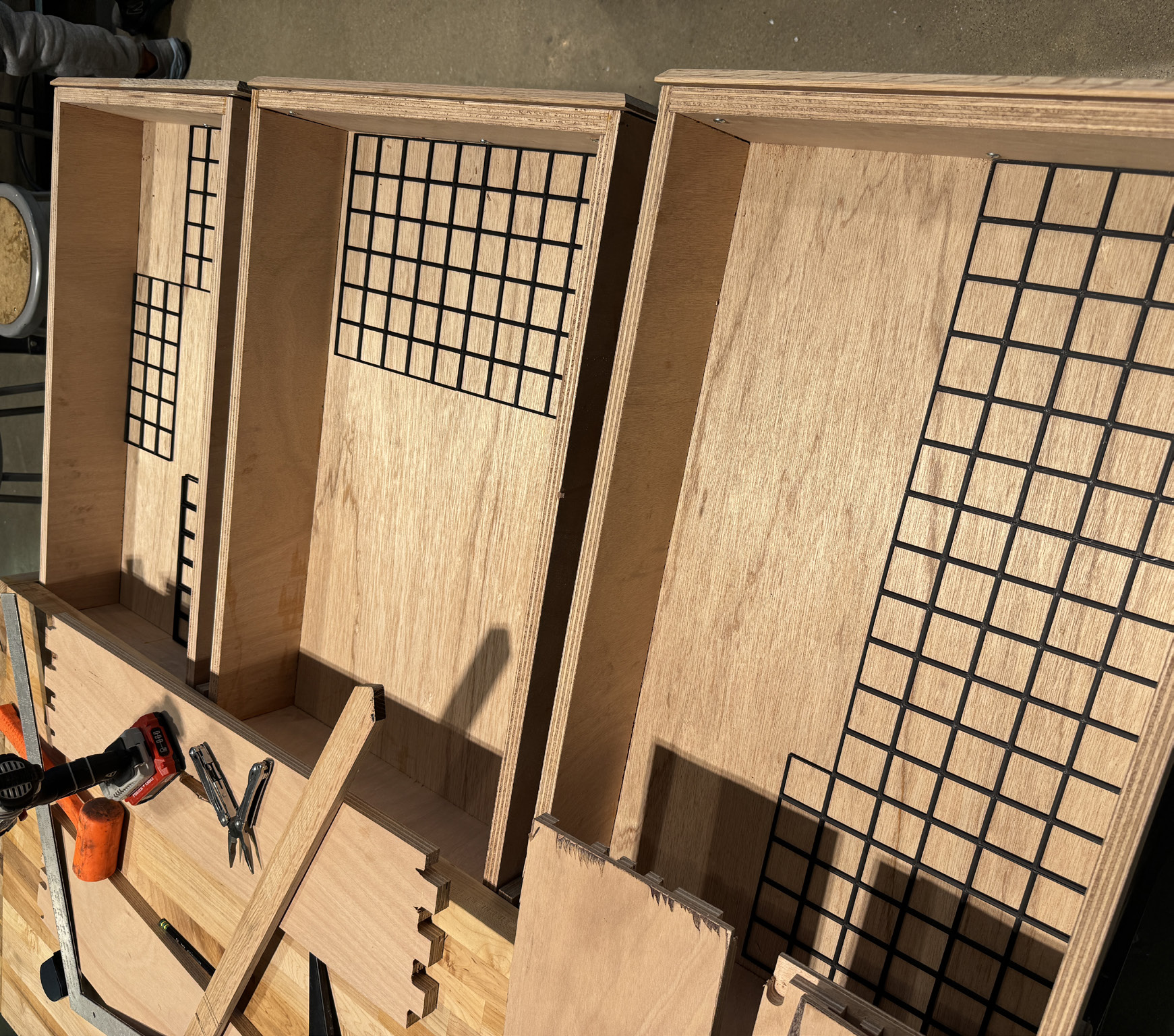
The cart and drawers are joined with a mix of CNC-cut joinery and a Domino joiner, with drawer slides hidden beneath dados cut into the sides. Drawer fronts got a push-to-open mechanism and a routed fillet edge, and the drawers themselves are organized with a gridfinity system: I measured spacer math by hand, then 3D printed custom holders sized to the specific bar tools and glassware that needed to fit.
Result
The finished bar holds the full collection, plus glassware and both appliances, in the same footprint the old shelving used to take up. The rolling cart’s caster placement went through a late change, from casters back to fixed wheels, once initial testing showed the loaded cart needed a more stable base than casters gave it.
The full process book, sketches, feedback rounds, material decisions, and every build step in between, is in the report linked in the sidebar.